Embodying wild mathematical dynamics
Wild Dynamics
These are dynamic systems that are neither deterministic, like the motion of a clock pendulum, nor statistically predictable, like a lottery draw. Recent research shows that many systems are so wild that they cannot be described by statistics.
Triptych
Films, Sculptures, and Theorems
In mathematics, a dynamical system is a motion that repeats periodically forever. Mathematicians study such systems, and in particular the complexity of their behavior.
Here I present three very short films, based primarily on scientific simulations, which present theorems in dynamical systems involving complex behavior. These films can be viewed on their own, but are designed to be viewed on a loop alongside nearby brass sculptures which represent the key ideas of the proofs of these theorems.
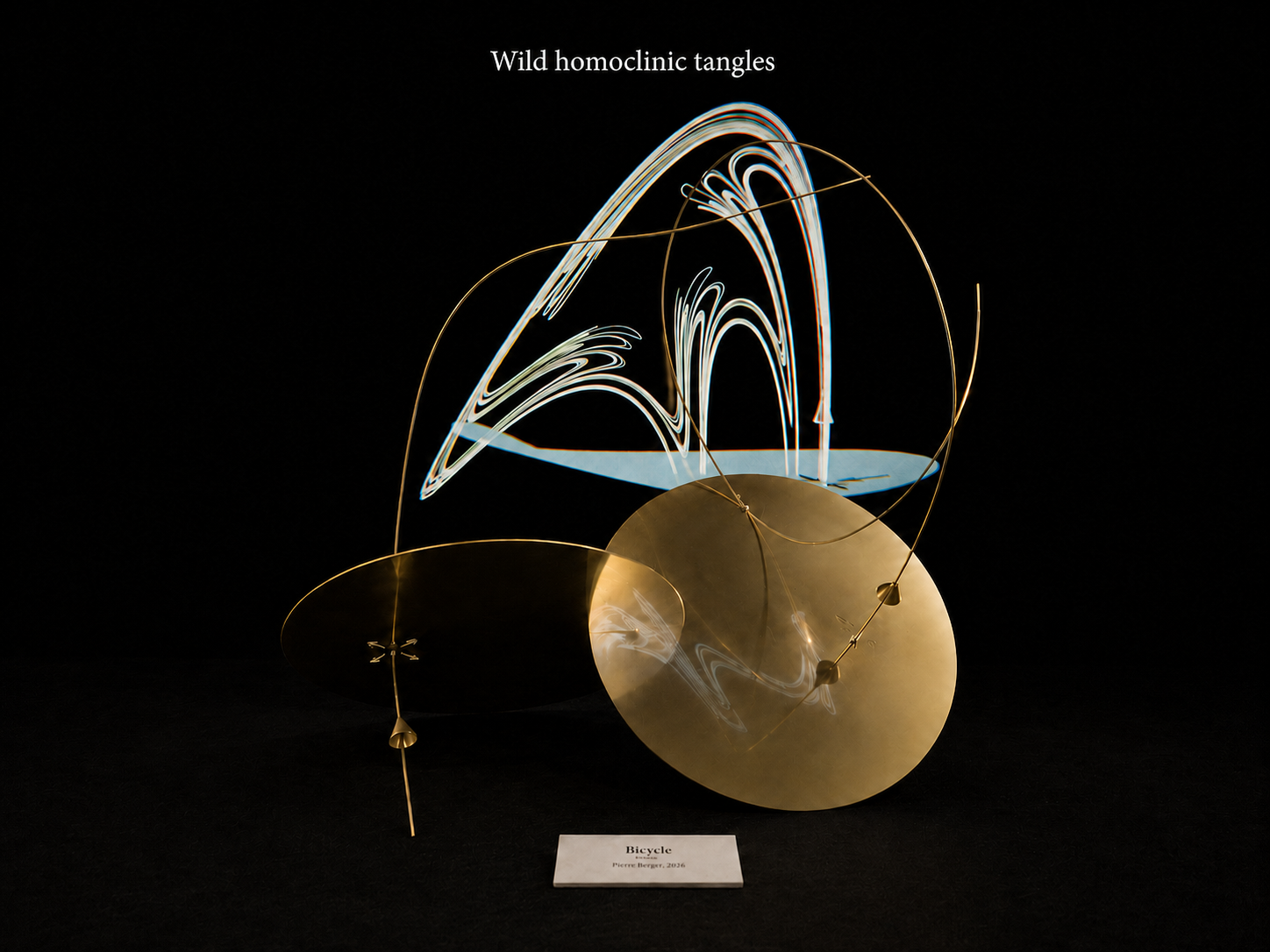
Installation
Wild dynamics & water organs
The spectator finds himself surrounded by a forest of autonomous aquatic slide organs, with wildly strange sounds.
The sound of the water slide organs is correlated to these mathematical trajectories, in a way that the more the statistic distributions of the projected trajectories are different the more the associated sounds are different and vice-versa.
A conversation between a wild (abstract) mathematical dynamics and a wild (real) music instrument takes place.
see this link to listen to it ↗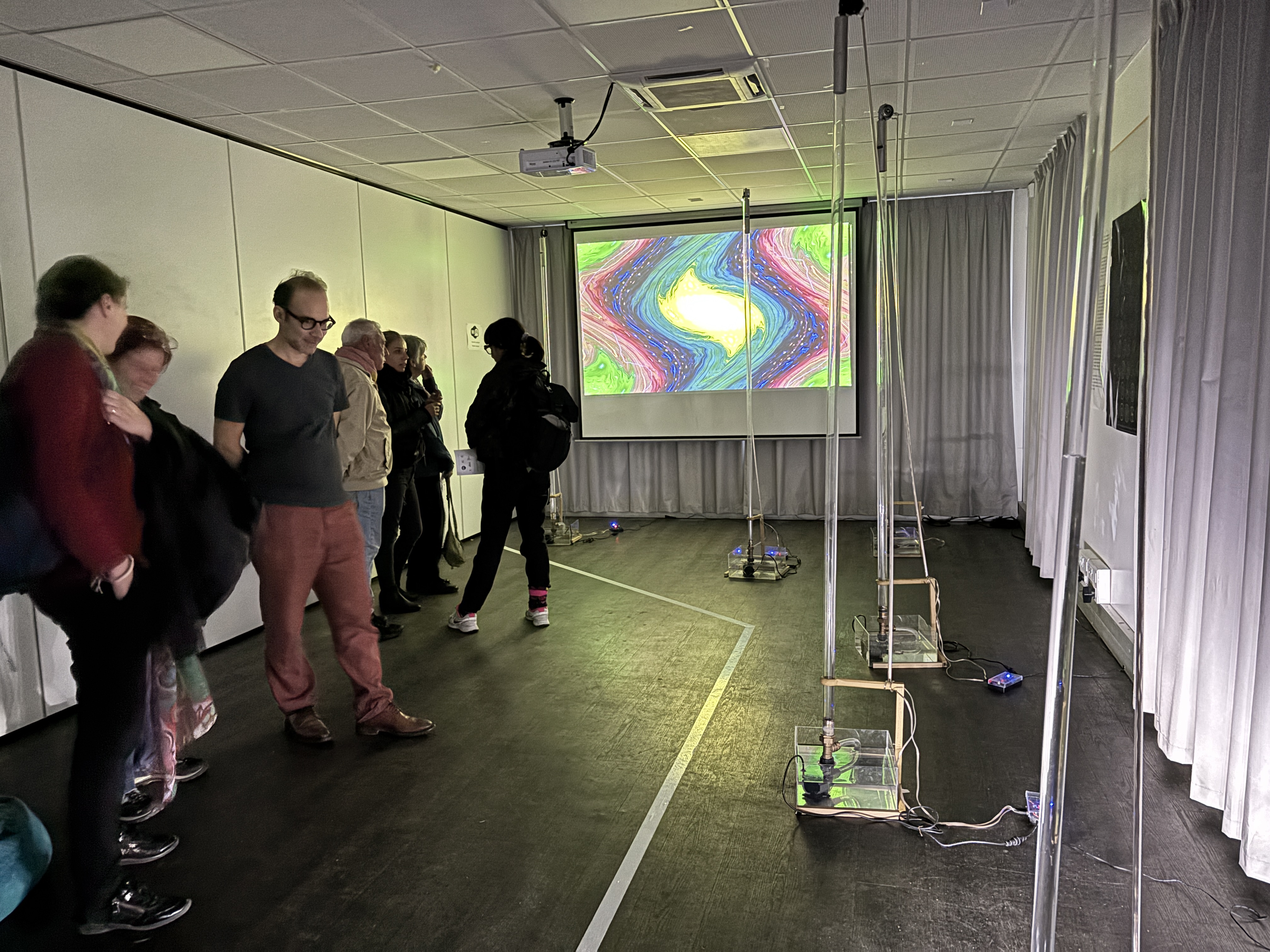
Dialogue Between Abstract Wild Dynamics and Water Organs
Pierre Berger, 2025
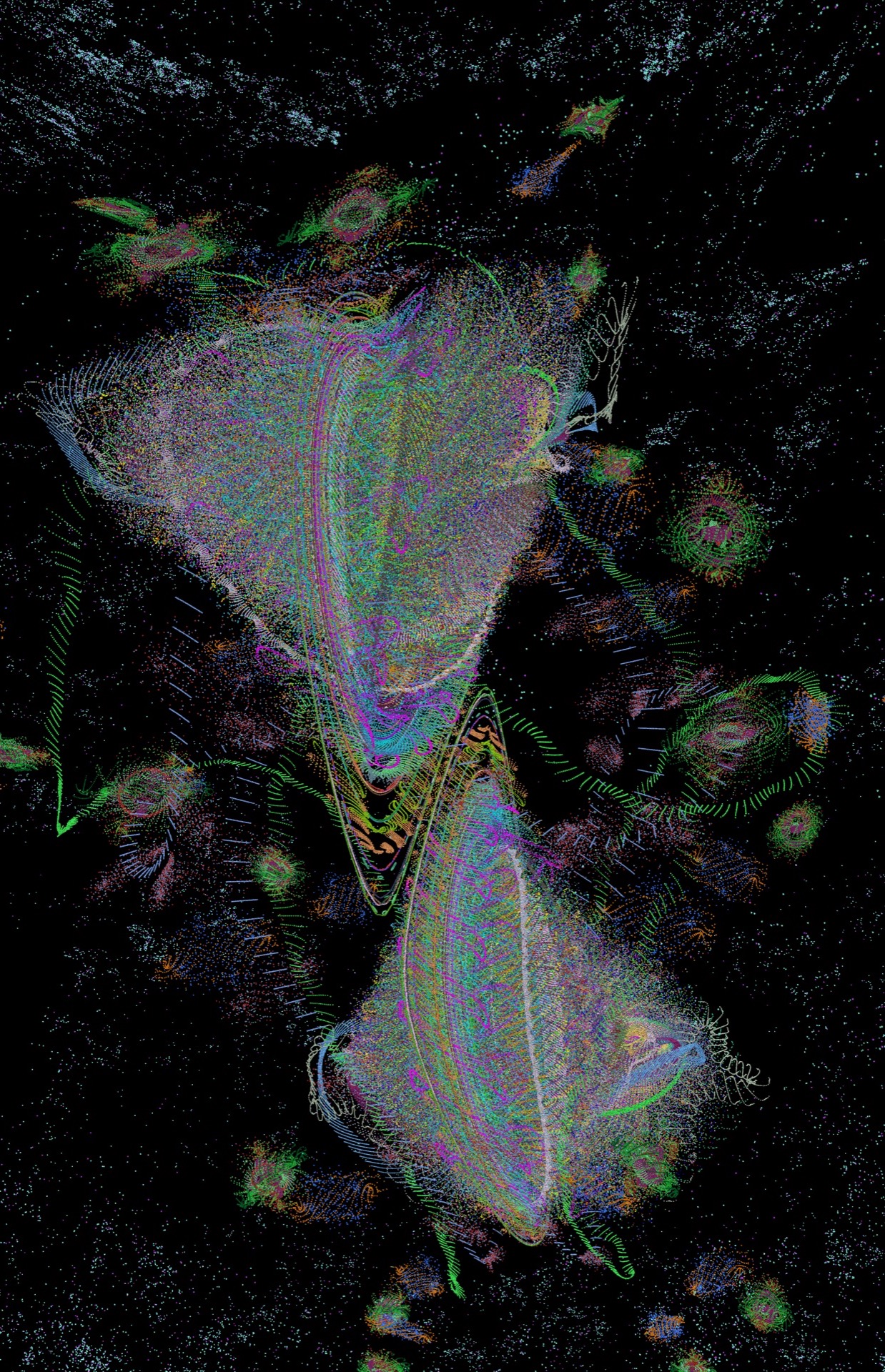
Portraits of Hénon maps
“I want to have an intuitive understanding of mathematical phenomena. Sometimes, such pictures tell us unexpected structure suggesting a new theorem.”
simulations by Shigehiro Ushiki from 90s to 2017
numerical experiences
Real Time Exploration of Wild Dynamics
Interactive platforms allow visitors to experience the sensations of exploring wild dynamic systems. An exploration in an imaginary country as beautiful as it is mysterious.
A setup based on artisanal scientific software, producing real-time parallel calculations (GLSN), which researchers use for their own digital experiments.
Panels
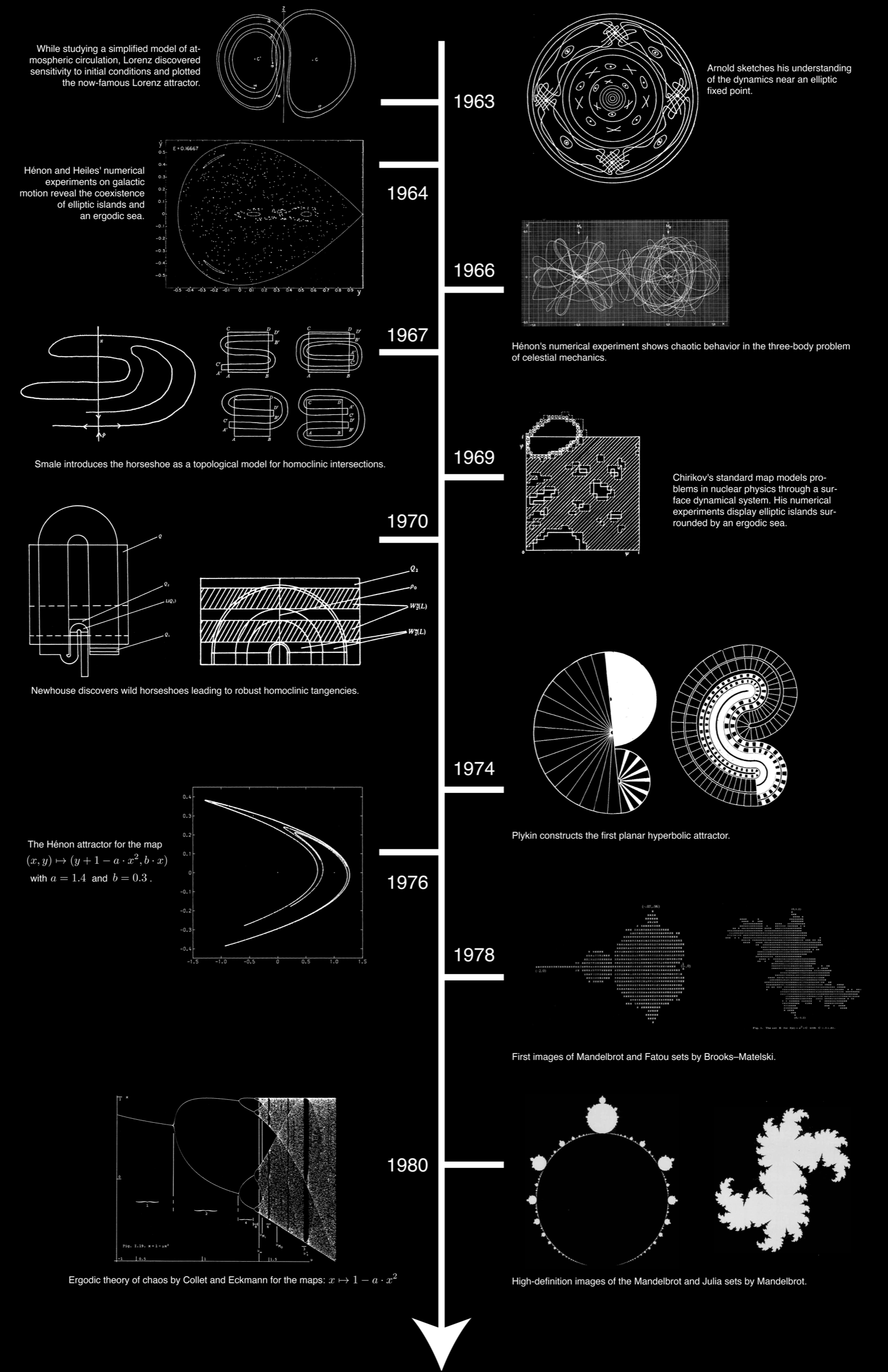
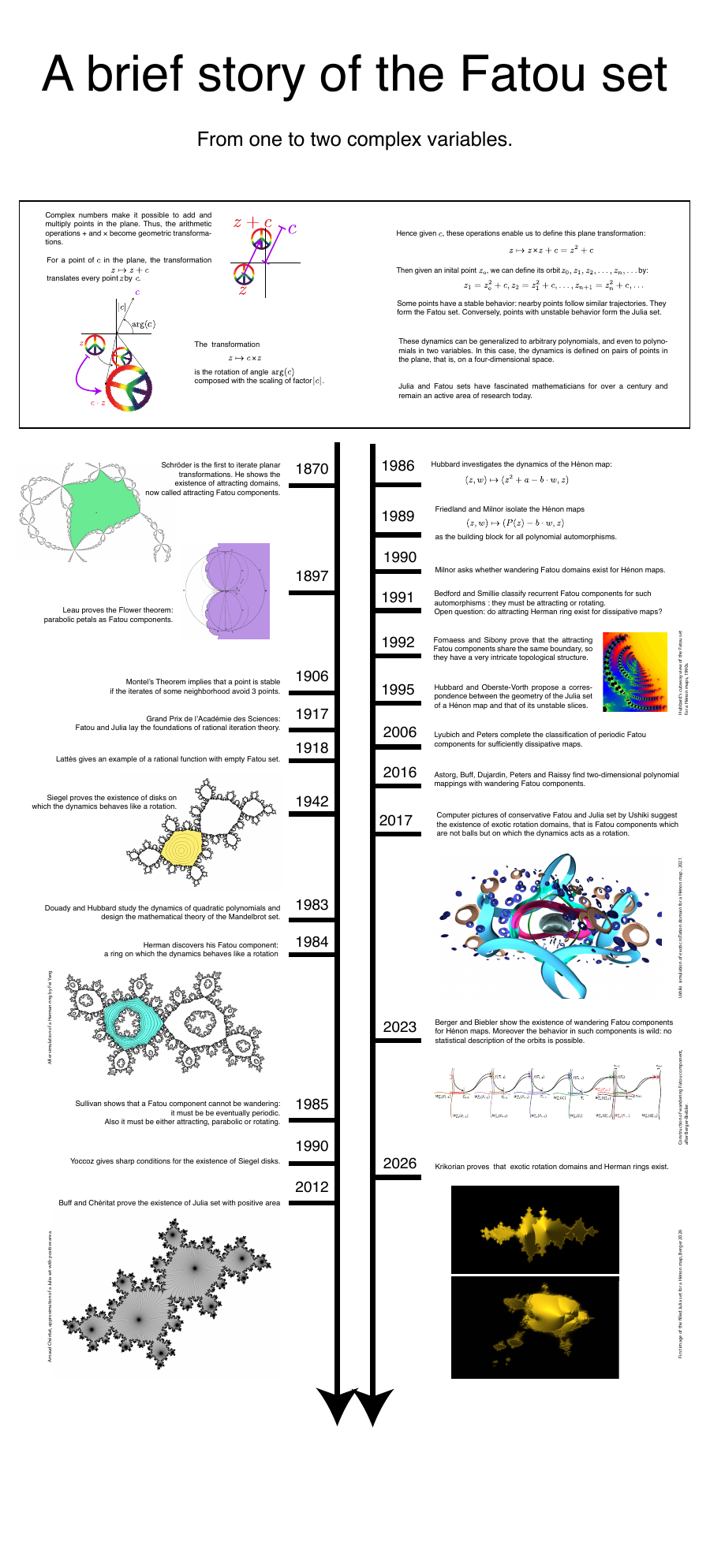
by Pierre Berger and Romain Dujardin, 2026
About
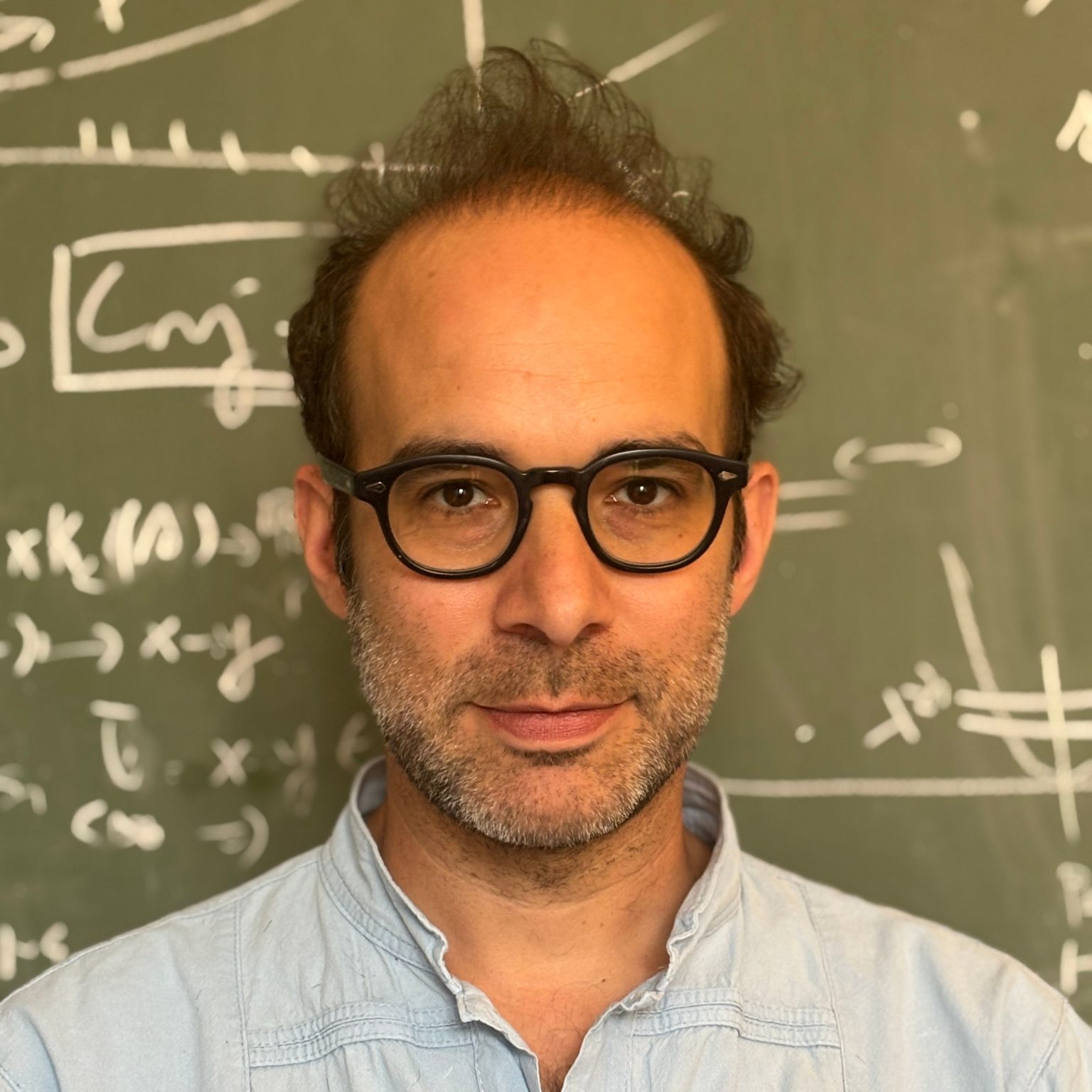
Pierre Berger
In my approach, I create media to catalyze sensations triggered by the encounter with mathematical universes. These universes are contemporary: they are not well understood, even by researchers. The artistic approach allows me to express the unspeakable part of these universes, their strange familiarities, and the disturbances they cause.
I enjoy proposing sensitive and unprecedented experiences in these universes; generating primary sensations from raw mathematics. To do this, I conduct research at the intersection of pure mathematics, numerical simulations, and art.
https://webusers.imj-prg.fr/~pierre.berger/ ↗